Garden Guide: This spring flower might just be the EASIEST you could ever grow
Daffodils grow great in tight spaces and is never bothered by pests or animals - and did you know there are more than 10,000 to choose from?
More Stories


Daffodils: Joyful Heralds of Spring
Daffodils are one of the first flowers to open up in the spring, and they are certainly one of the best. Not only are the cheerful, trumpet-shaped flowers reliable, but they are also hardy! Whether you have a sprawling backyard or just a container garden on a balcony, daffodils might be the perfect plant to kick off your spring season.
Why are Daffodils a must-grow flower?
As Pat Voll, a Cornell master gardener, shared during my recent visit with the Cornell Cooperative Extension of Nassau County: “They are the heralds of spring. They are so joyful.”
I couldn’t agree more — and daffodils offer so much more than just their beauty:
Space-Smart: Like most spring bulbs, daffodils thrive in small spaces and can be tucked into narrow walkways, along fences, or under trees where other plants struggle due to root competition.
Animal Resistant: If you’re constantly battling hungry deer, rabbits, or squirrels, daffodils are a game-changer. Animals avoid them due to their toxicity, making them a beautiful and practical addition to any landscape.
Low Maintenance: Once planted, daffodils return year after year with little effort. If blooms dwindle, it’s often due to overcrowding. Simply divide and replant the bulbs, and the magic returns.
Emotionally Resonant: Daffodil clumps can survive for decades. Many gardeners develop a personal connection to them. “A loved one of mine who died 30 years ago planted daffodils in my garden, and every year I have been graced with a beautiful bouquet,” Pat shared. Their perennial nature brings comfort and continuity for years to come.
A Flower with Endless Variety: The 13 Daffodil Classifications
While most people recognize the classic golden trumpet daffodil, Narcissus plants are incredibly diverse. With over 10,000 registered cultivars, the American Daffodil Society recognizes 13 official types:
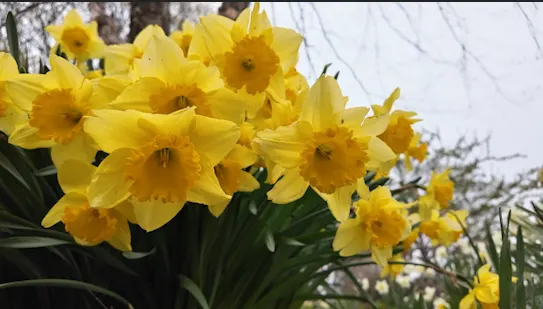
1. Trumpet Daffodils: One flower per stem with a trumpet (corona) as long or longer than the petals. Typically yellow, but can also be white, orange, red, or multi-colored.
2. Large-Cupped Daffodils: One flower per stem, with a cup more than one-third the length of the petals. Shorter cups than trumpet daffodils.
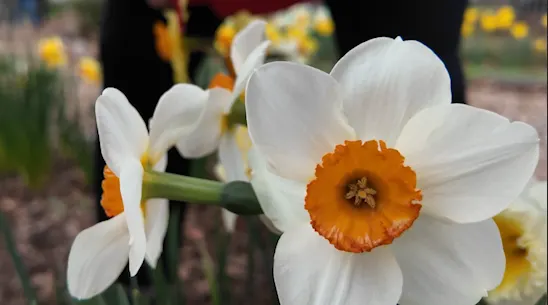
3. Small-Cupped Daffodils: One flower per stem, with a cup no more than one-third the length of the petals.
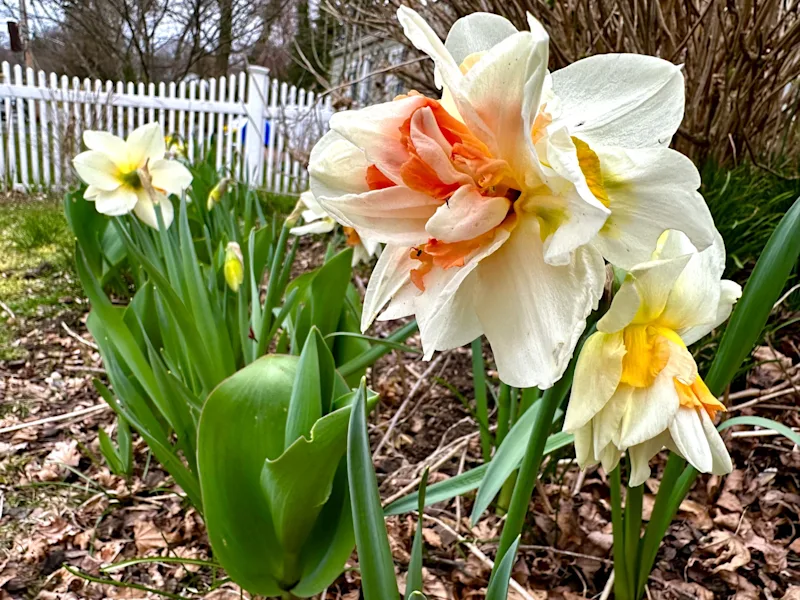
4. Double Daffodils: Ruffled, peony-like flowers with multiple layers of petals.
5. Triandrus Daffodils: Smaller, drooping, bell-shaped blooms with multiple flowers per stem.
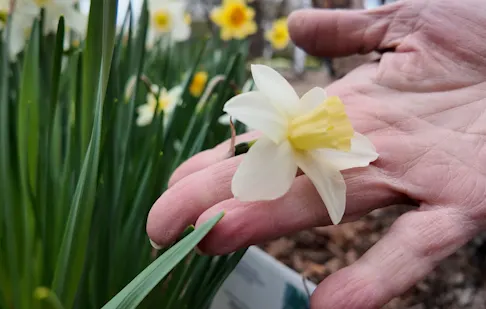
6. Cyclamineus Daffodils: Petals sweep backward and flowers droop. Smaller in size and similar to Triandrus, but with arched petals and typically one flower per stem.
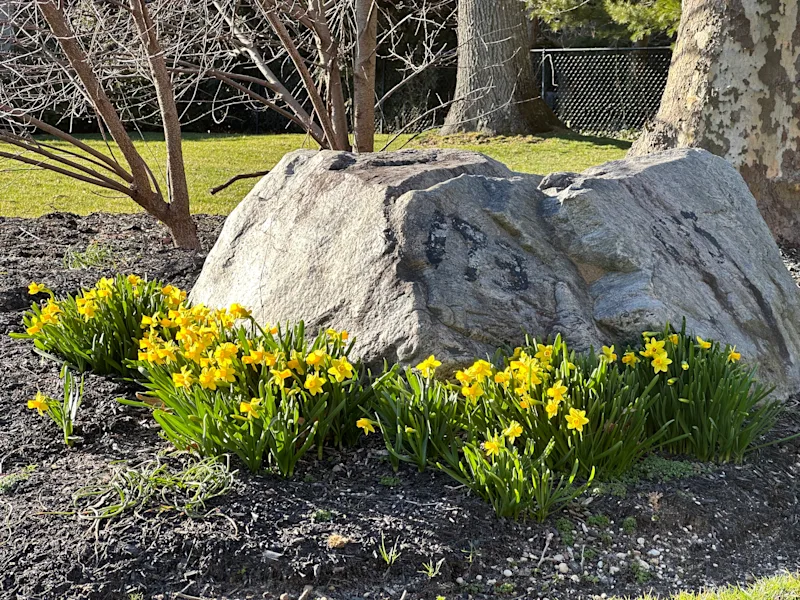
7. Jonquilla Daffodils: Always fragrant, with grass-like leaves and multiple blooms per stem.
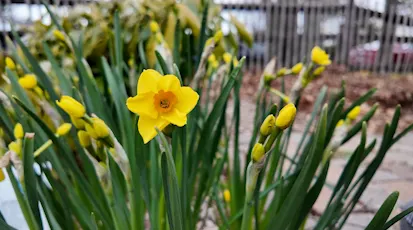
8. Tazetta Daffodils: Very fragrant. Clustered blooms on each stem. Known for varieties like “Paperwhites.”
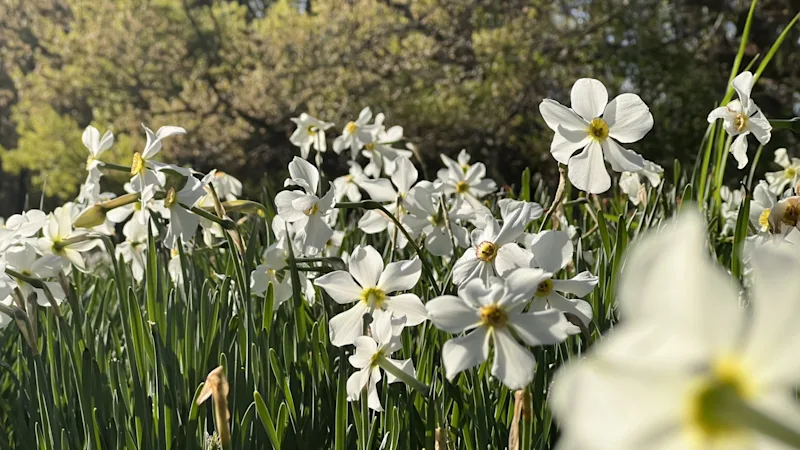
9. Poeticus Daffodils: White petals with a small, colorful cup and a green center. Strong fragrance. Late-blooming.
10. Bulbocodium Daffodils: Unique trumpet-shaped flower without large outer petals. Less common.
11. Split-Corona Daffodils: The cup is split and flares outward, creating a daylily-like look.
12. Species Daffodils (Wild Varieties): Naturally occurring daffodils with a delicate, smaller appearance.
13. Miscellaneous/Hybrid Daffodils: Includes hybrids that don’t fit neatly into other categories.
See Them Bloom in Person — For Free!
Looking to get inspired this spring? Visit the Cornell Cooperative Extension of Nassau County’s East Meadow location to enjoy daffodils and other vibrant spring blooms in person. The grounds are free and open to the public, making it a perfect outing for families, plant lovers, and curious gardeners alike.
Planting Tips & Timing
Daffodil bulbs are typically sold in autumn and should be planted from mid-fall into early winter. If you purchase live, blooming daffodils in spring, you can plant them after they finish flowering — just be sure to leave the foliage intact until it yellows naturally, so the bulb can store the energy created by those leaves for next year.
Thank you to Cornell Cooperative Extension of Nassau County for sharing their expertise.