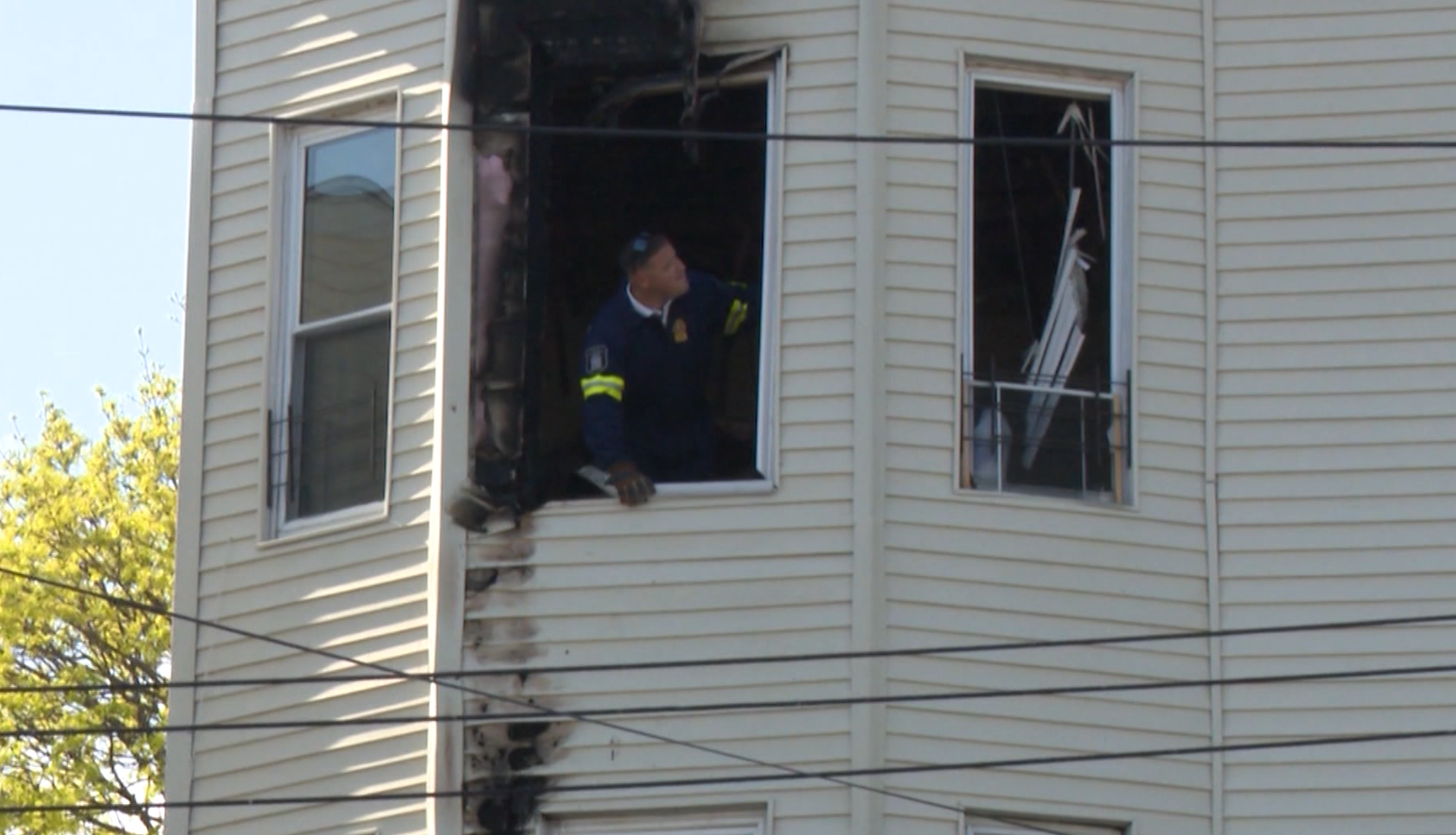
Third lithium-ion battery fire in Warwick raises renewed questions about safety and toxic exposure
The fire broke out Friday night at an energy storage facility operated by Convergent Energy and Power on Church Street.
More Stories



Fire conditions are improving Monday after a lithium-ion battery fire at an energy storage facility in Warwick, but the incident is once again raising questions about safety, oversight and what toxic chemicals may have been released into the air.
The fire broke out Friday night at an energy storage facility operated by Convergent Energy and Power on Church Street. Officials say the fire is out, though crews spent days monitoring the site as battery temperatures slowly dropped — a common challenge with lithium-ion battery fires which often cannot be extinguished using traditional firefighting methods and are instead allowed to burn out under controlled conditions.
“When it was at its worst, there were flames and it was heart-stopping — especially since we’ve been here before,” said Warwick Mayor Michael Newhard.
Newhard said heavy rain and wind likely played a role in this latest fire, echoing what officials said following previous incidents in Warwick involving similar battery storage systems.
“We had driving rain and wind — the perfect storm,” Newhard said. “But if this was watertight, it should not have affected it. I believe water got into the system and created a spark and created a fire, just like last time.”
This is now the third lithium-ion battery fire in Warwick in roughly two years, involving two separate Convergent sites. In 2023, back-to-back incidents occurred at both the Church Street facility and a different energy storage facility located on property owned by the Warwick Valley Central School District. Officials said those incidents were also weather-related, with water intrusion blamed after periods of heavy rain.
The 2023 incidents occurred over the summer when school was not in session and did not force closures or delays, though county officials later confirmed that toxic chemicals were detected in air samples taken during one of the fires. At the time, officials said the levels were within safe limits but declined to identify which chemicals were present.
Lithium-ion batteries are known, according to fire-safety research and hazardous materials guidance, to contain materials that can release toxic gases and fine particles when they burn, including hydrogen fluoride, carbon monoxide, volatile organic compounds and metal particulates. Hazardous materials officials stress that real-time air monitoring is designed to identify immediate threats to public safety and may not capture longer-term or cumulative exposure risks.
During this most recent fire, Orange County Emergency Management deployed multiple air-quality monitors around the Church Street site, as well as near nearby neighborhoods and parks. Officials say those monitors did not detect readings above federal guidelines, though final data has not yet been released. News 12 has submitted a Freedom of Information request seeking the full air-quality reports from all three Warwick battery fires.
Environmental advocates say the repeated incidents highlight broader concerns.
“Who is protecting the environment? Who is protecting our health and safety – our air and our water?” said Pramilla Malik, chair of Protect Orange County. “This is toxic overload. When officials say something is within safe limits, they’re often talking about averages over time. Once these chemicals are released, you can’t just put them back.”
Malik also raised concerns about potential impacts to soil and water, saying short-term air monitoring alone does not address long-term environmental exposure.
Nearby residents say they remain uneasy, even as officials reassure the public that conditions are safe.
“There are concerns,” one resident told News 12. “I’m just hoping the levels actually are safe.”
Mayor Newhard said the village is now discussing next steps with its attorney and is pushing for additional oversight, including independent inspections and surface testing to check for any residue left behind by smoke.
“There’s a lot of skepticism and concern, and I hear that loud and clear,” Newhard said.
A company spokesperson for Convergent Energy and Power said the fire at the Church Street facility was "localized in one of the units," extinguished within 24 hours, and did not cause any injuries. The spokesperson said HAZMAT "measured air quality as safe throughout the weekend" – adding that a physical presence remains at the site as a precaution. While there may be similarities to the 2023 incidents, the company said "it is too early to definitively determine the cause," noting that a full root cause analysis is underway. Convergent also said that following the 2023 fires, all battery systems in Warwick were replaced with new units meeting enhanced standards and underwent third-party testing and review.
News 12 also followed up with the Warwick Valley Central School District regarding the company’s second facility on school-owned property. Village officials confirm that site remains operational and was closely monitored during the most recent storm, with no issues reported.
News 12's Lisa Larocca live at the scene