Cold weather is coming soon, how can you rescue your favorite tropical patio plants?
The cold weather is almost here and Alex shares whether or not it's worth rescuing those tropical plants you've enjoyed all summer long.
More Stories


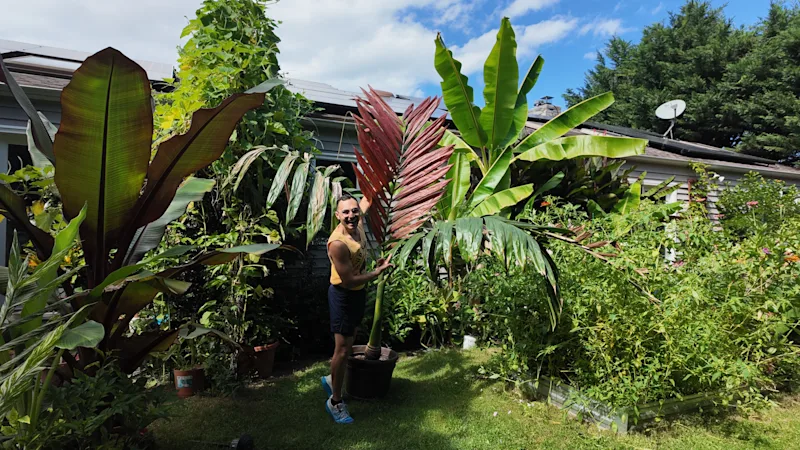
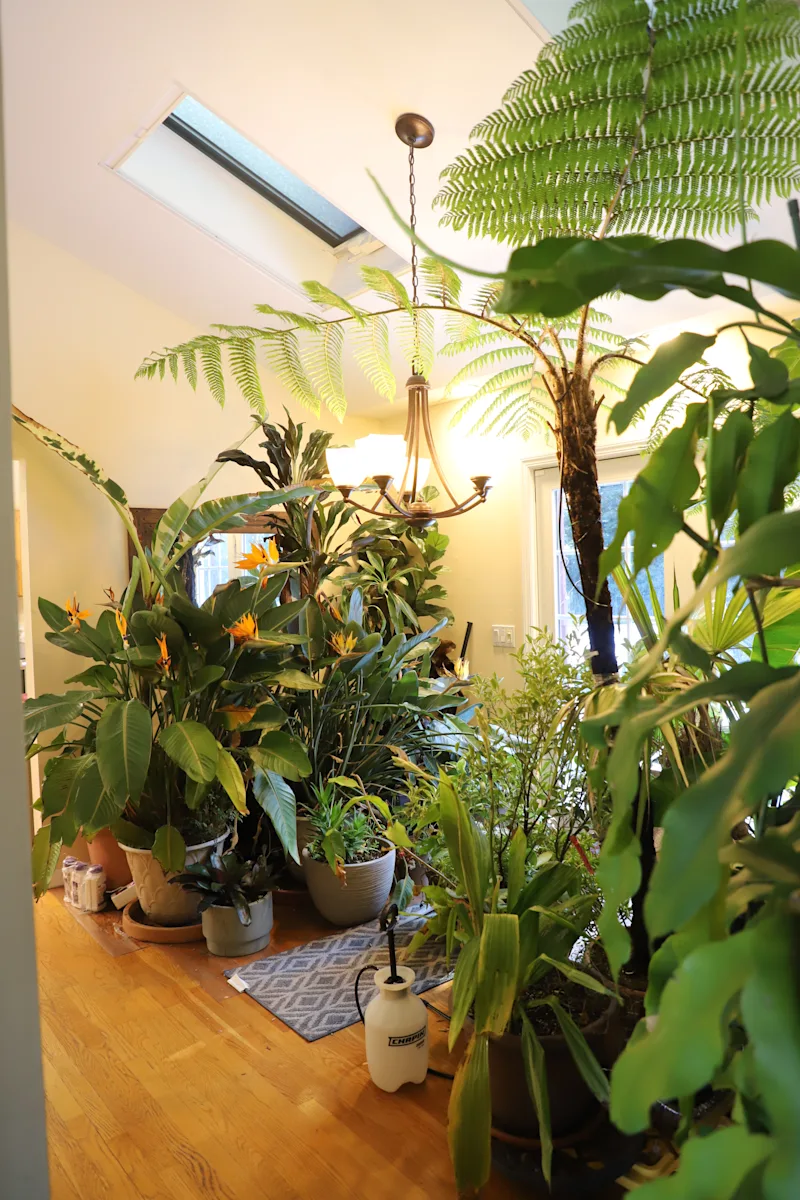
The temperatures are dropping fast and reality is setting in for me ... it's almost time to bring my plants inside. I have a huge tropical jungle to bring inside, but if you fell in love with one of your tropical patio plants this summer, you may want to rescue them too!
The key is knowing which plants are worth saving, when to bring them in and how much winter protection they actually need. You can keep up with my progress on social media & I'd love to see your garden too!
Don't Wait for the First Freeze
The biggest mistake I see is waiting until the weather is already too cold. Tropical plants will slow down on cool nights and this makes them susceptible to damage. When temperatures start dropping into the low 40s and daytime temperatures are in the 60s or upper 50s, it's about time to bring your plants in.
My favorite plants to overwinter
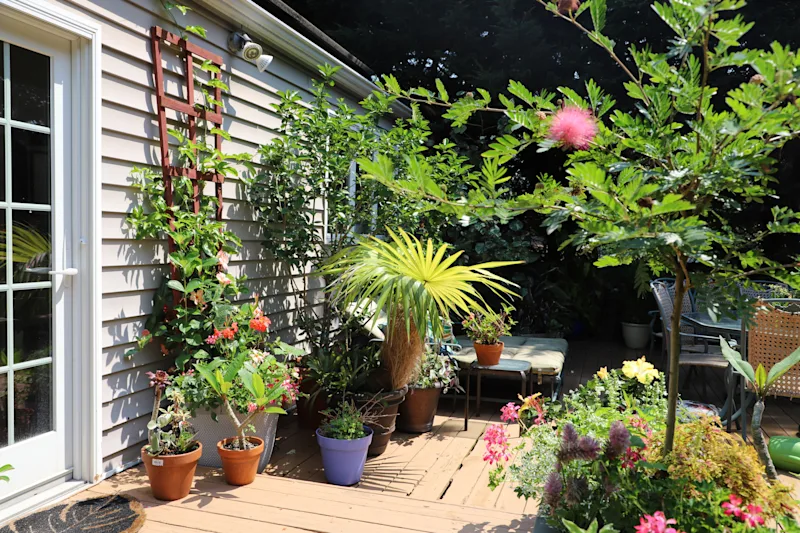
My tropical garden is a lot of maintenance so I really appreciate anything that's hands off during the wintertime and for that, you have to look for plants that grow by tubers, bulbs, or can go dormant. Here are a few I recommend for our climate.
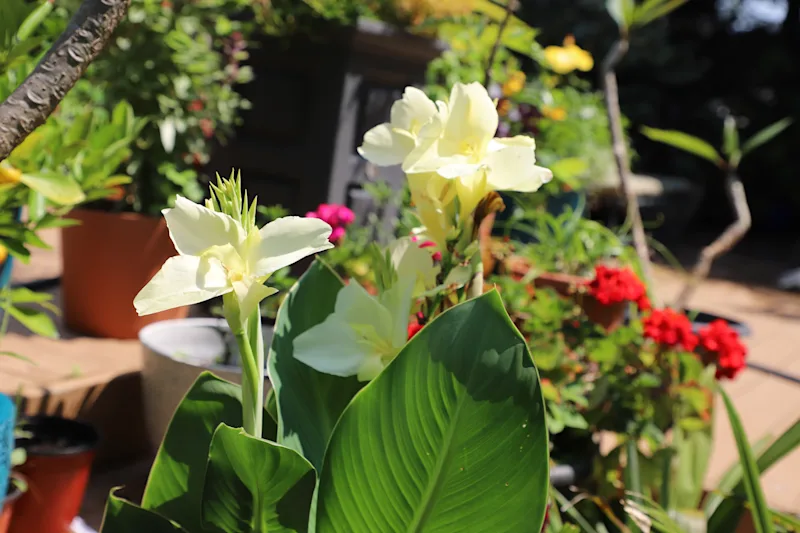
1) Cannas
Cannas will get massive in a single season with beautiful, large, and sometimes colorful leaves and flowers that are sometimes even more impressive. These plants will die back after the first hard freeze, but they aren't dead! Their massive underground rhizomes will survive as long as the ground doesn't freeze. Some cannas will come back if you plant them in a warm part of the garden, but you can cut the dead leaves and bring the rhizomes into a cool, dark spot like a basement or garage until freezing. It's best to store these in a place that's between 40 and 55-degrees. Any warmer and they could start to sprout.
2) Dahlias, Calla, and flowering Ginger
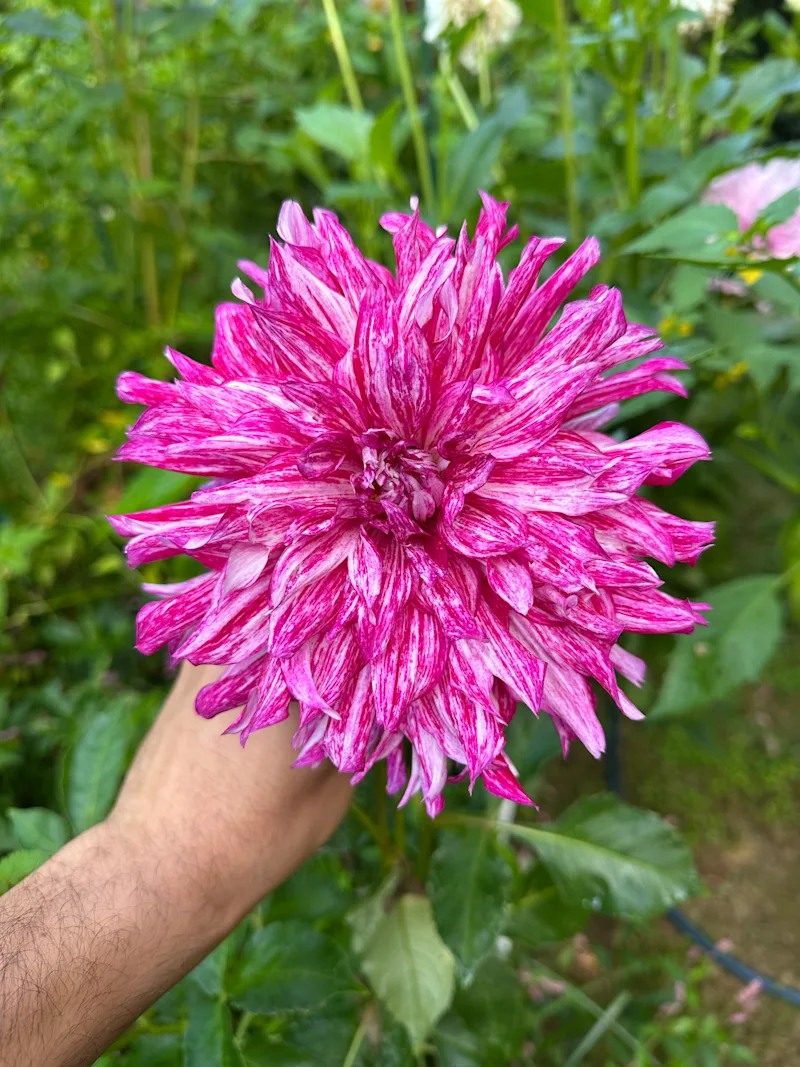
Cannas aren't the only tropical plant with a hidden secret underground. Beautiful dahlia flowers and fragrant ornamental ginger have large rhizomes too that can be brought into a cool and dark place after the first freeze of the season for winter storage.
3) Bananas
We only see one type of banana at the grocery store, the Cavendish, but there are thousands of different species and a few are quite cold tolerant. My favorite is the Musa Basjoo banana. Also known as the Japanese Fiber Banana, this is the only reliable perennial banana in our climate It will survive the winter in a warm part of the garden, but it will grow back faster and better if you give it some mulch to keep it warm.
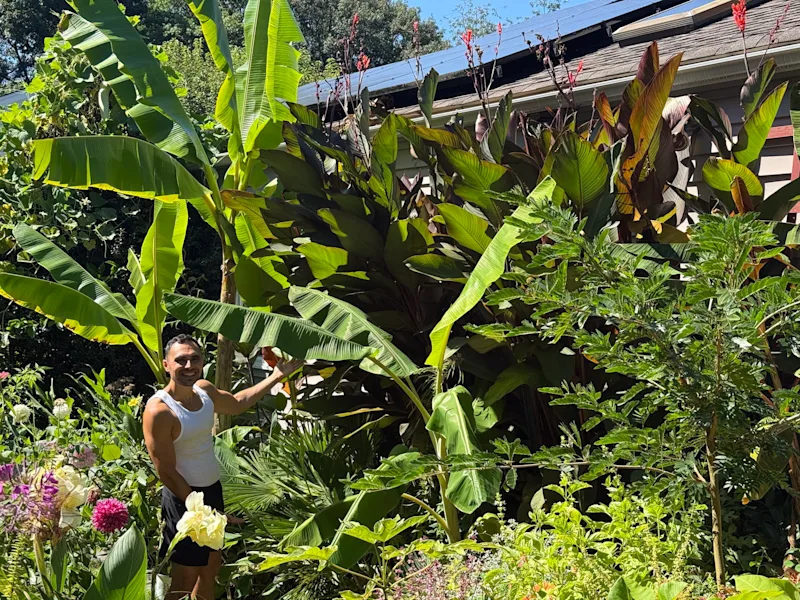
Other banana plants like the "Abyssinian Red Banana" or "Ice Cream" banana are more tropical, but the leaves can be cut back and it will overwinter nicely in a cool and dark place. For banana plants, I prefer to overwinter in a warmer spot than cannas, ideally around 50-degrees.
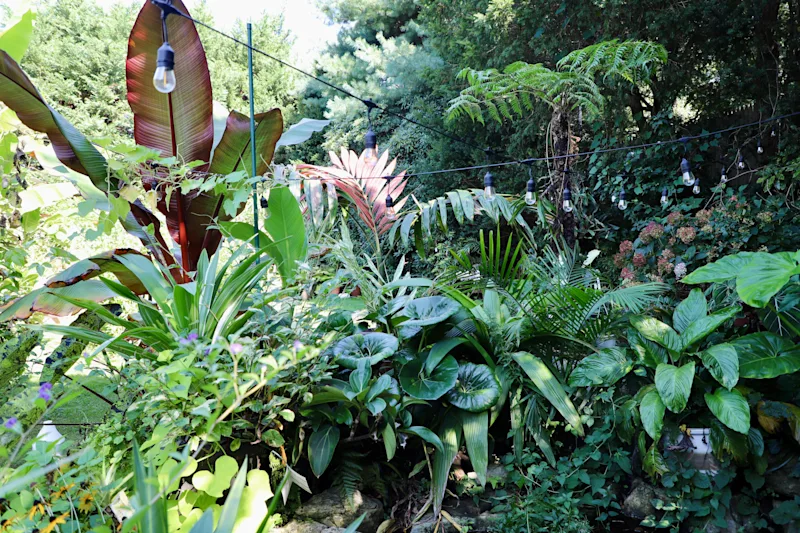
The Cavendish is the easiest fruiting banana to grow in containers. This plant is more cold sensitive so I do recommend treating this as a house plant and keeping by a warm and sunny window indoors.
Mandevilla and Dipladenia
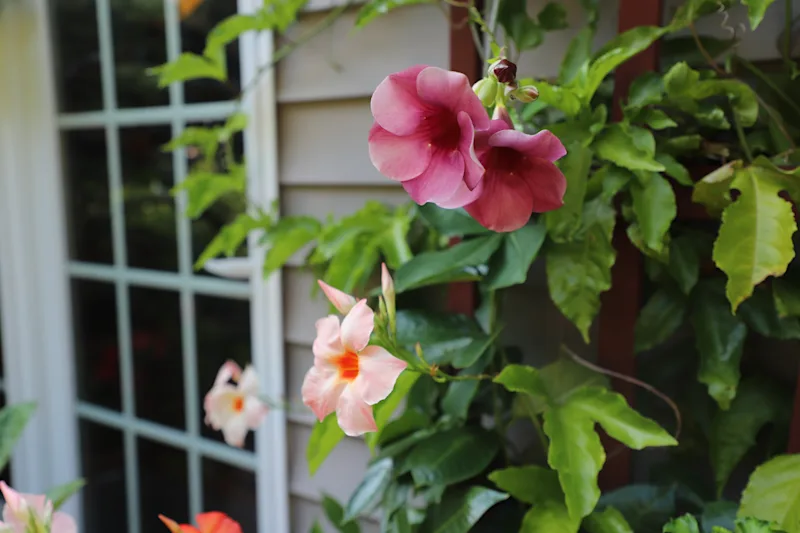
Mandevilla is one of my favorite plants for creating a tropical look in a relatively small space. Give it something to climb and it can produce an incredible amount of growth during one summer. By fall, though, that beautiful vine becomes something I need to rescue from the cold.
You can mandevilla indoors before temperatures get too cold. It can be pruned back to make it more manageable, and it can spend the winter as a houseplant in a bright location. It will look very raggedy indoors, but the goal is to keep the plant alive. These plants recover quickly in spring.
Dipladenia is related to mandevilla but is more compact and bushier. I particularly like it for containers where I want flowers without a massive vine taking over. It can also be brought indoors for the winter, but I do not recommend cutting this back in autumn. It makes a great window plant, but tends to get leggy inside the house so I wait until spring to prune my Dipladenias. This will make them grow back better in your summer garden.
What About All Those Annuals?
This is where I have to exercise some restraint. There are plenty of fast-growing annuals that I could try to save, but I don't save everything. Some plants are inexpensive and easy to replace. Others are special varieties that I really want to keep. And some are simply too large to justify taking over part of my house for several months.
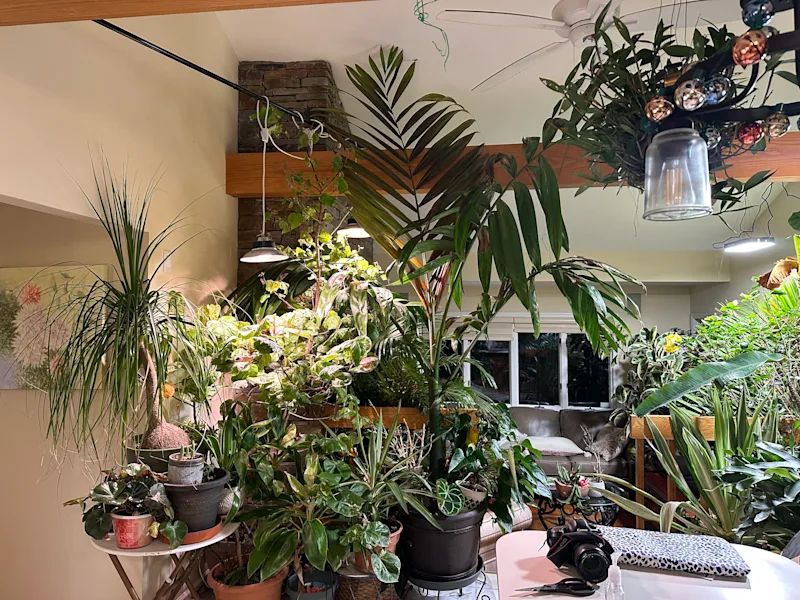
For the plants I do bring inside, I inspect them carefully before they come indoors. I look underneath leaves and around stems for insects, because the last thing I want is to bring a pest problem into my indoor plant collection.
I also expect some plants to lose leaves or slow down after coming inside. The transition from a sunny summer garden to the much lower light levels indoors can be dramatic. That doesn't necessarily mean the plant is dying. Sometimes it is simply adjusting.
For more, check out Alex's Facebook page or on Instagram!