Music brings joy and connection to seniors with cognitive impairments
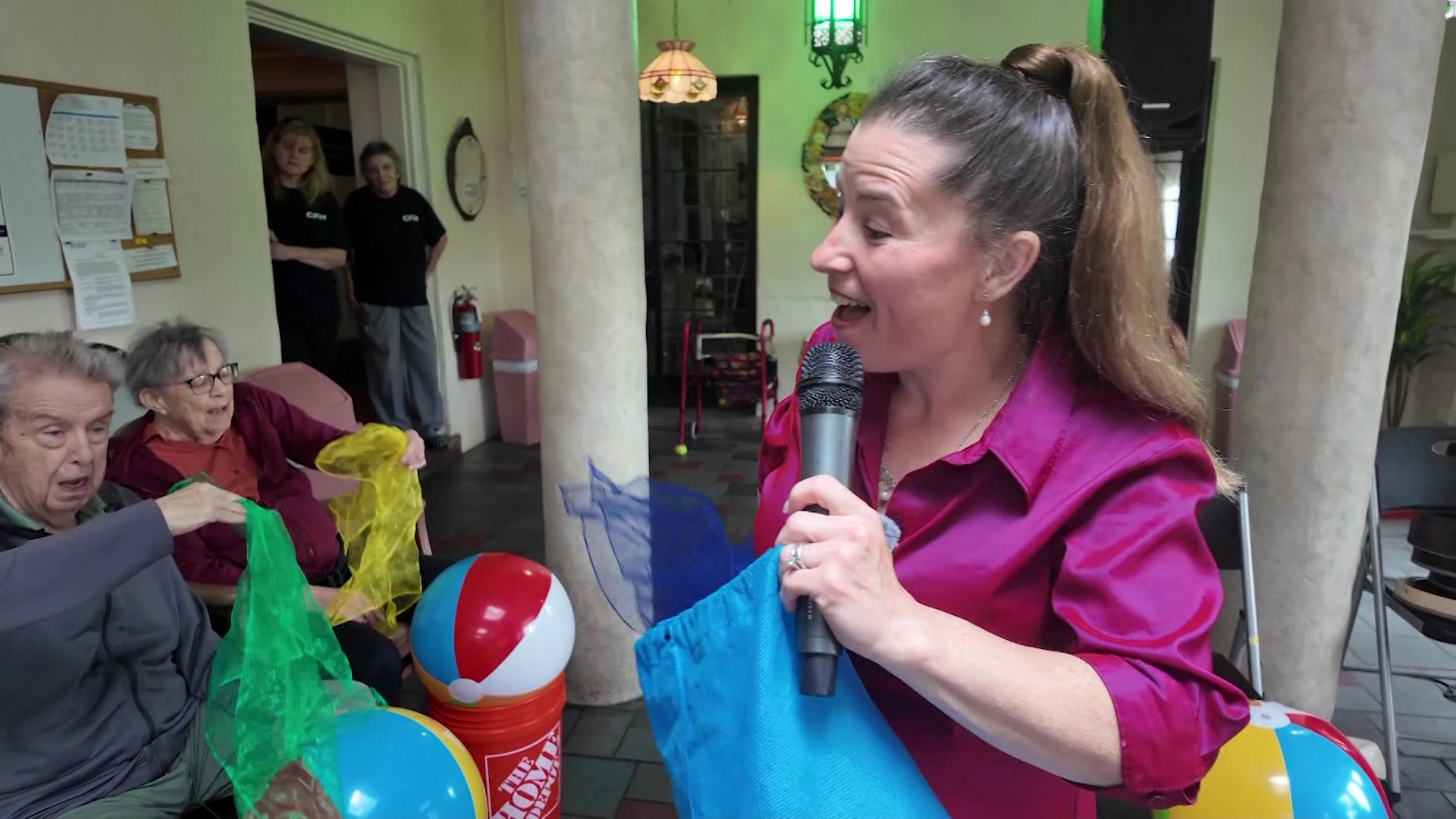
The performance was led by recreation therapist Theresa Morale, who regularly uses music to engage seniors living with cognitive impairments, including dementia.
More Stories



As the familiar tune of “Que Sera, Sera” echoed through Christian Fellowship House in Syosset, residents smiled, sang along and tapped out rhythms.
The performance was led by recreation therapist Theresa Morale, who regularly uses music to engage seniors living with cognitive impairments, including dementia. While memory loss can make everyday communication difficult, many residents effortlessly recalled song lyrics and actively participated in the session.
Rather than simply watching, residents became part of the performance, creating their own percussion section and singing familiar songs such as “He’s Got the Whole World in His Hands.”
Morale said music can unlock abilities that remain intact even as cognitive decline progresses.
“For people living with dementia, they do have preserved abilities, and it’s my job to focus in on that and use music as a tool to bring that out,” Morale said.
Medical experts say there is science behind music’s powerful effect on people with dementia. Dr. Payal Sud, of Northwell Health, explained that music and sensory experiences tied to memories can stimulate emotional centers of the brain that are often preserved despite cognitive impairment.
“Old memories, music or the smell of something activates our emotional part of the brain,” Sud said.
According to Sud, the areas of the brain responsible for processing emotions and music are different from those most affected by dementia and other forms of cognitive decline. As a result, music can help patients connect with memories and emotions even when other cognitive functions have diminished.
Sud added that music therapy may also reduce anxiety and aggressive behaviors, potentially decreasing the need for medication in some patients.
At Christian Fellowship House, the benefits were easy to see. Residents clapped, sang and shared enthusiastic praise for the performance, with one attendee simply declaring, “She’s good. She’s good!”
For the residents gathered, the session offered more than entertainment. It provided connection, engagement and moments of happiness through melodies that continue to resonate long after other memories may fade.